Telegram bot
One managed configuration drives daily team updates.
Status● Enabled
Morning plan09:00
Evening recap17:00
TimezoneAsia / Manila
VoiceTeam persona
ControlAdmin managed



Beginning with condominium and office-building management—then expanding into operating systems shaped for each industry.
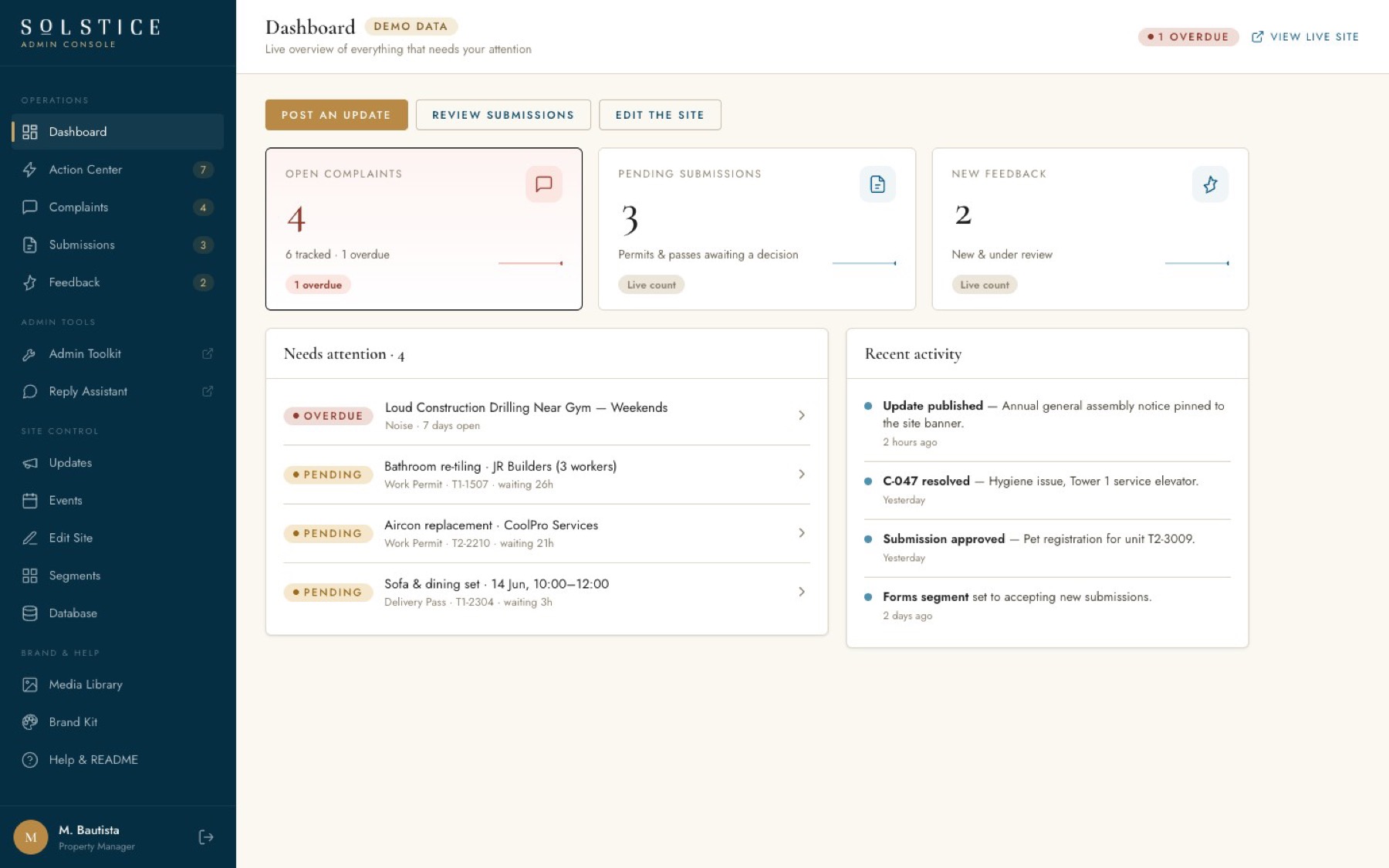
The full admin dashboard—including the left navigation—is visible. Complaints, submissions, feedback, overdue work, and recent activity share one operational view.
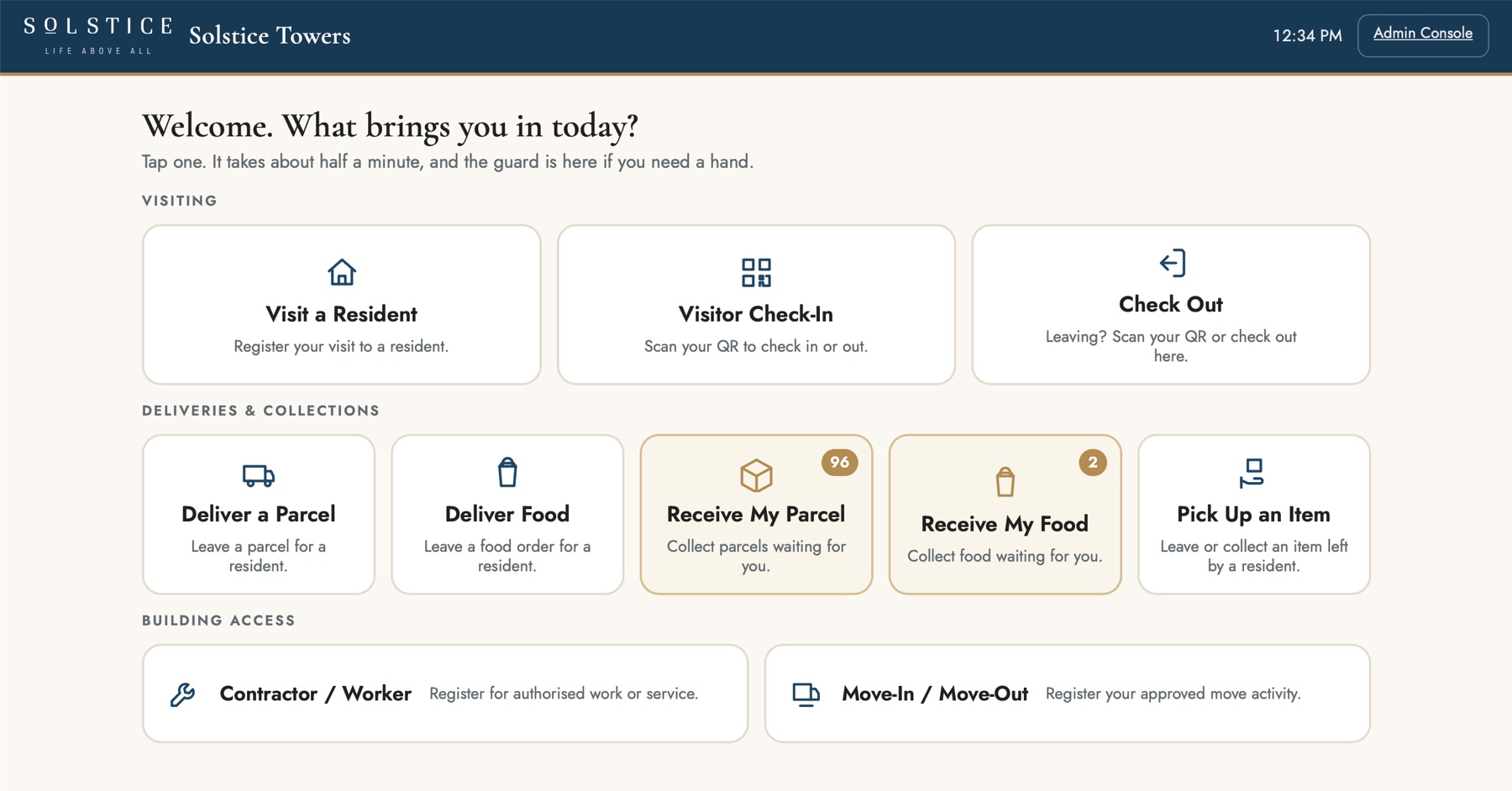
Resident web forms, lobby kiosk workflows, and the Solstice live dashboard can run together in one screen so teams can work without screen switching.
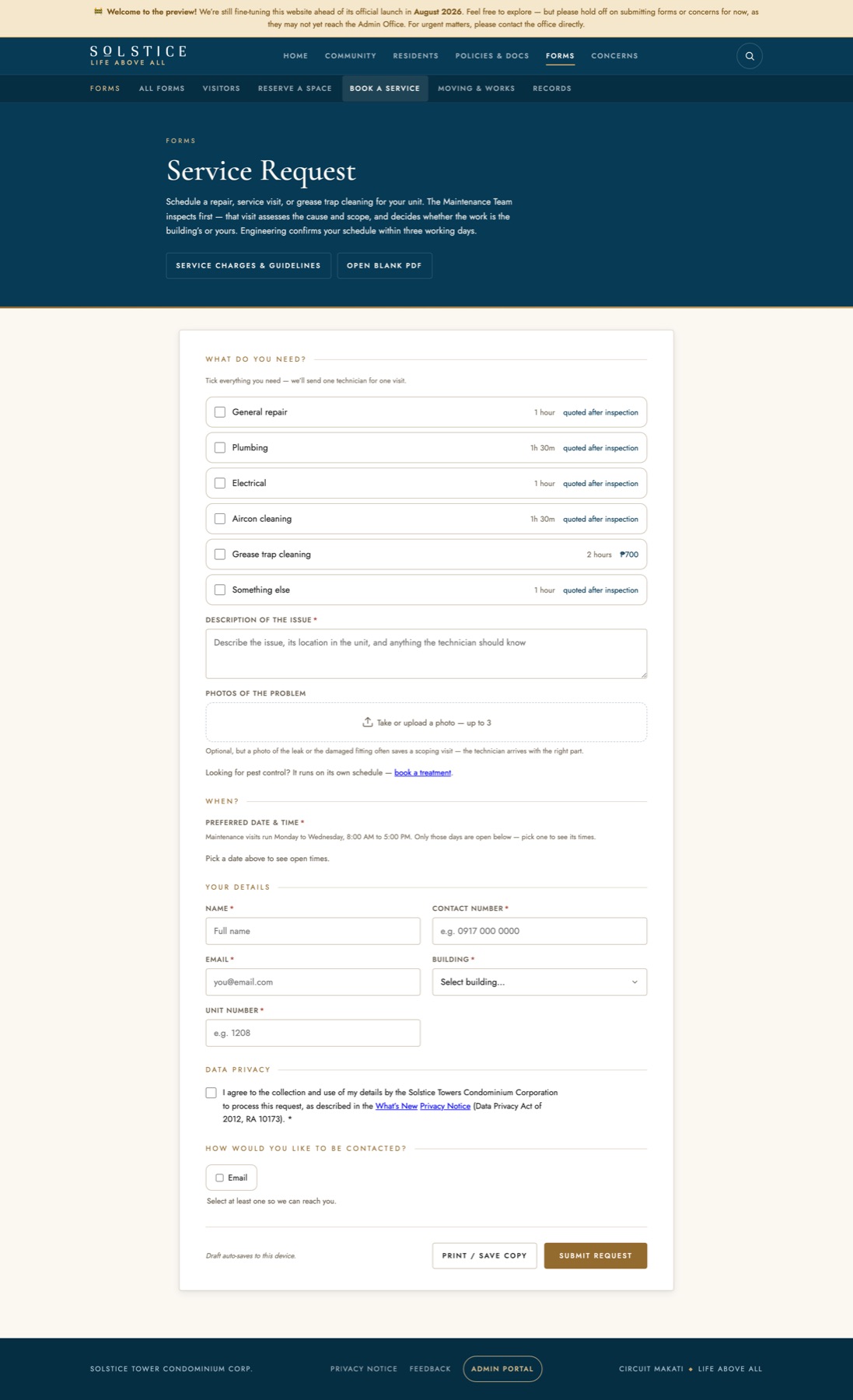
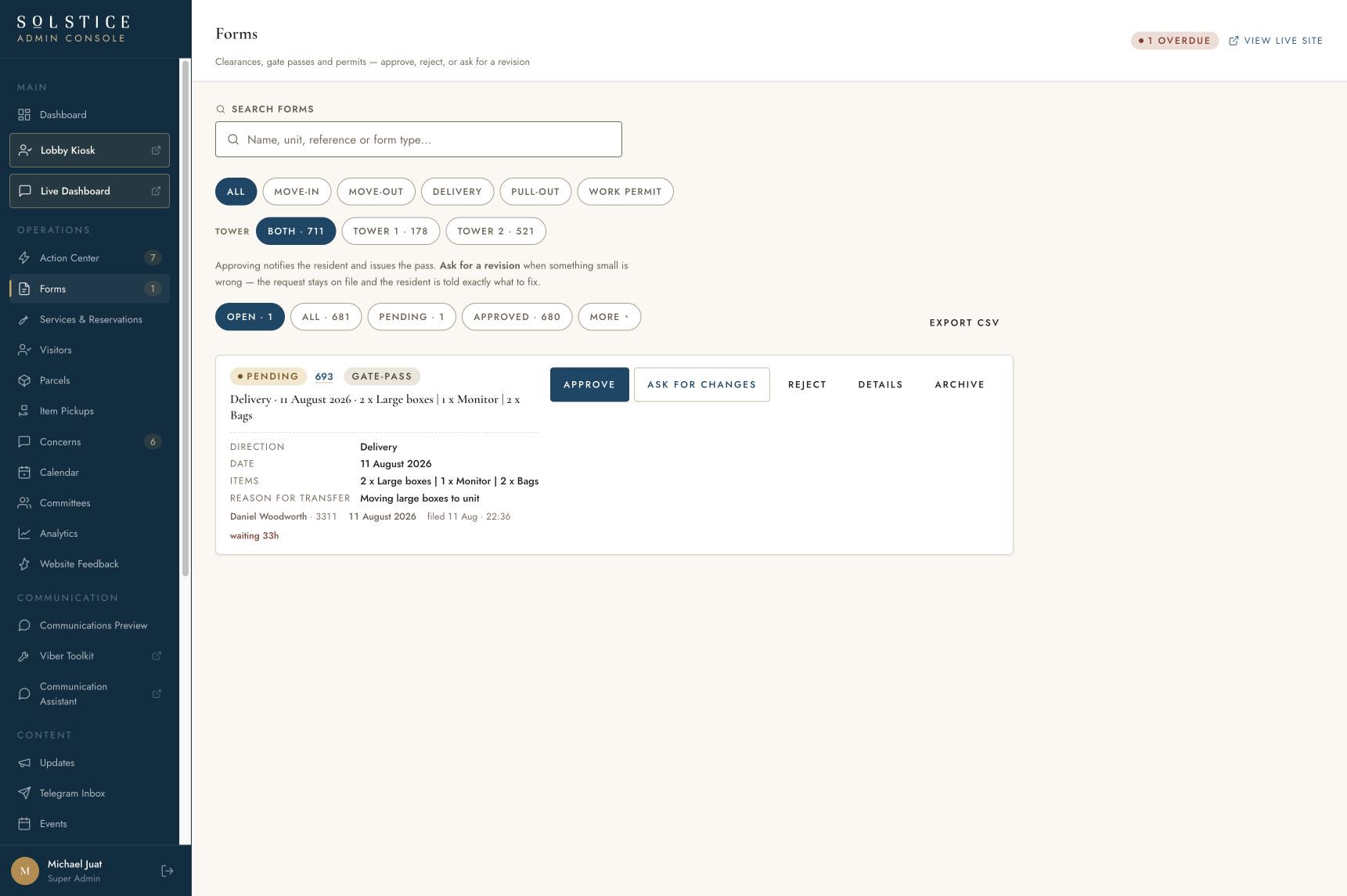
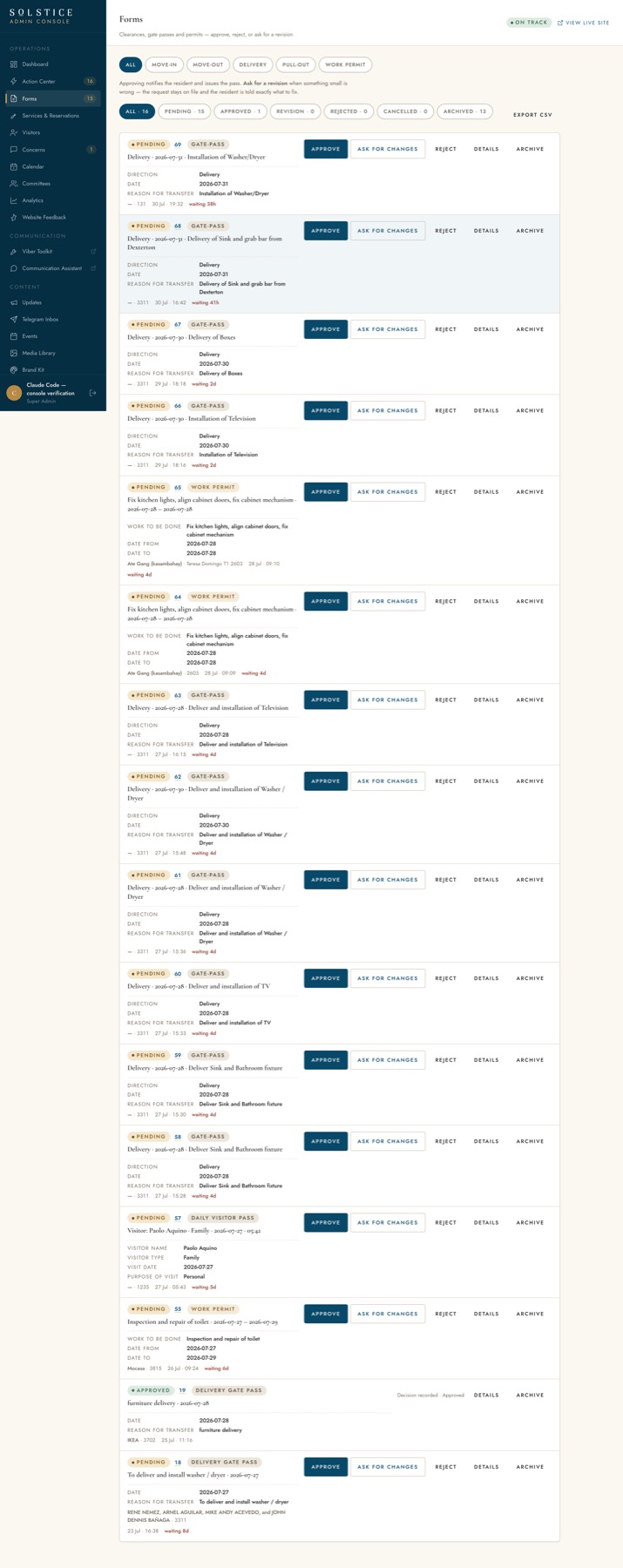
The complete admin page stays visible: sidebar, filters, counts, form data, approve, ask for changes, reject, details, archive, export, and the rest of the operational workspace.
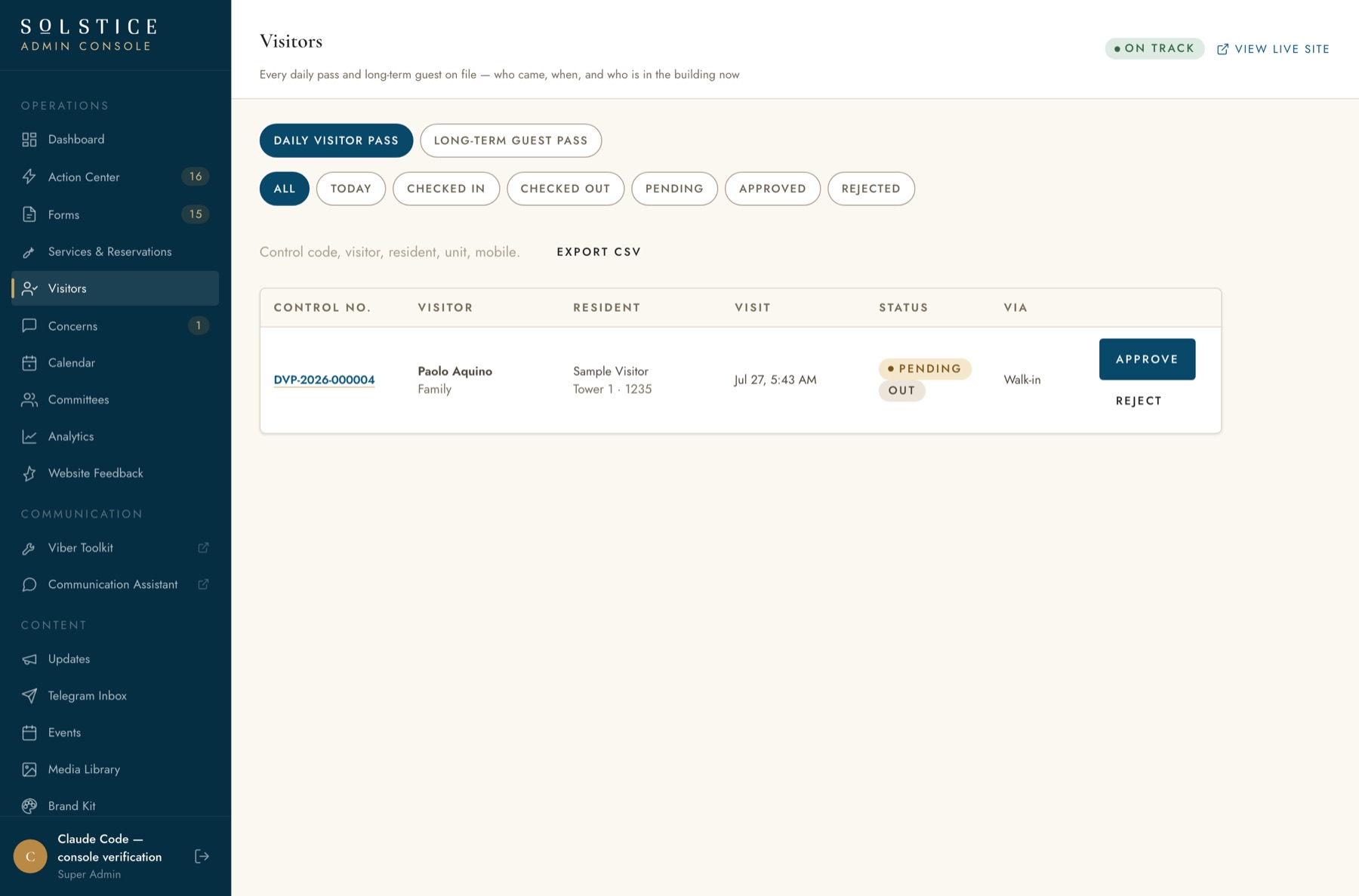
Daily passes, long-term guests, date, tower, check-in state, search, exports, and the complete navigation remain visible in one full admin page.
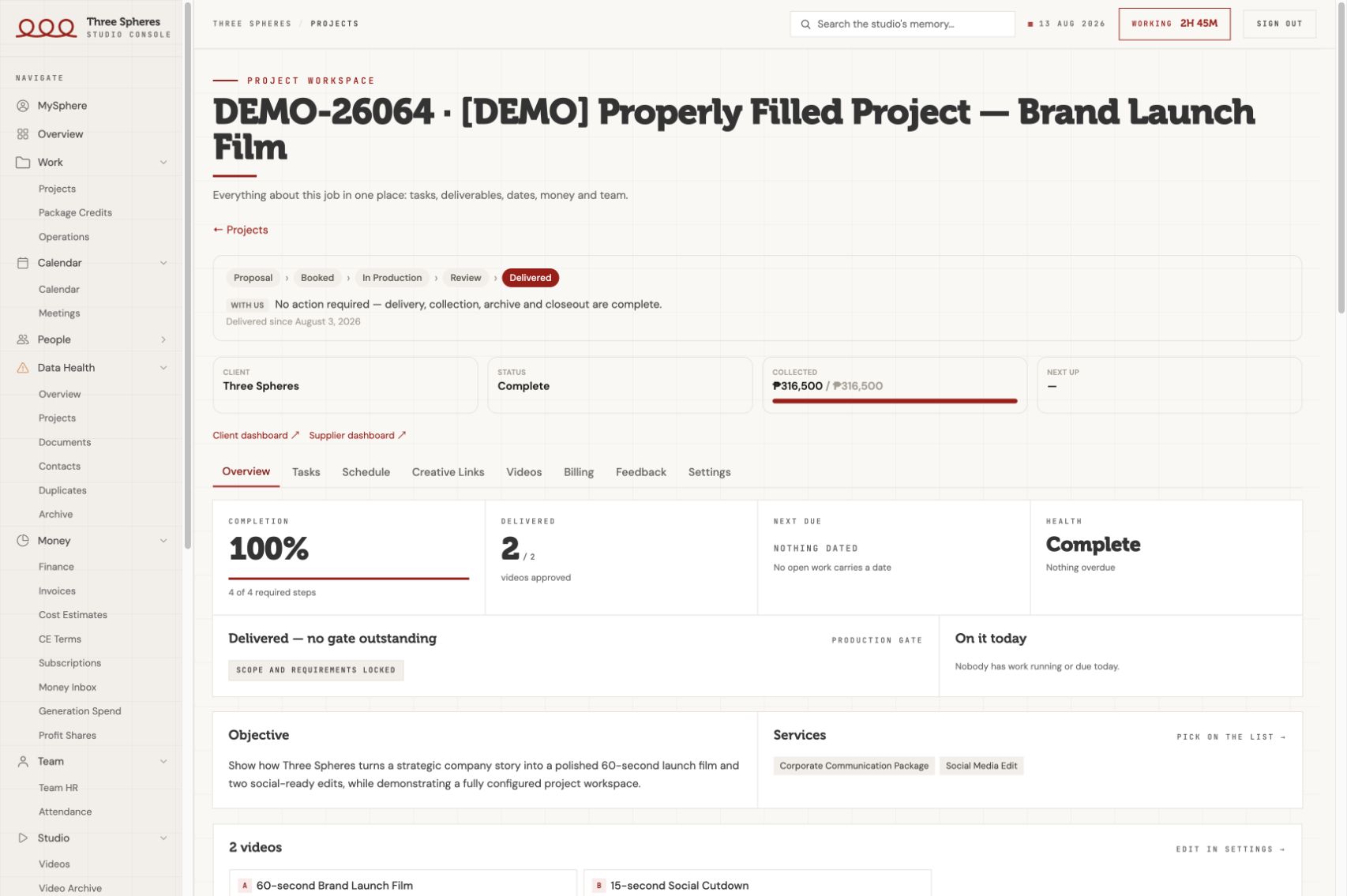
The complete project overview is visible with its sidebar: stage, health, collection, next action, deliverables, objective, services, videos, timeline, and role-aware portals.
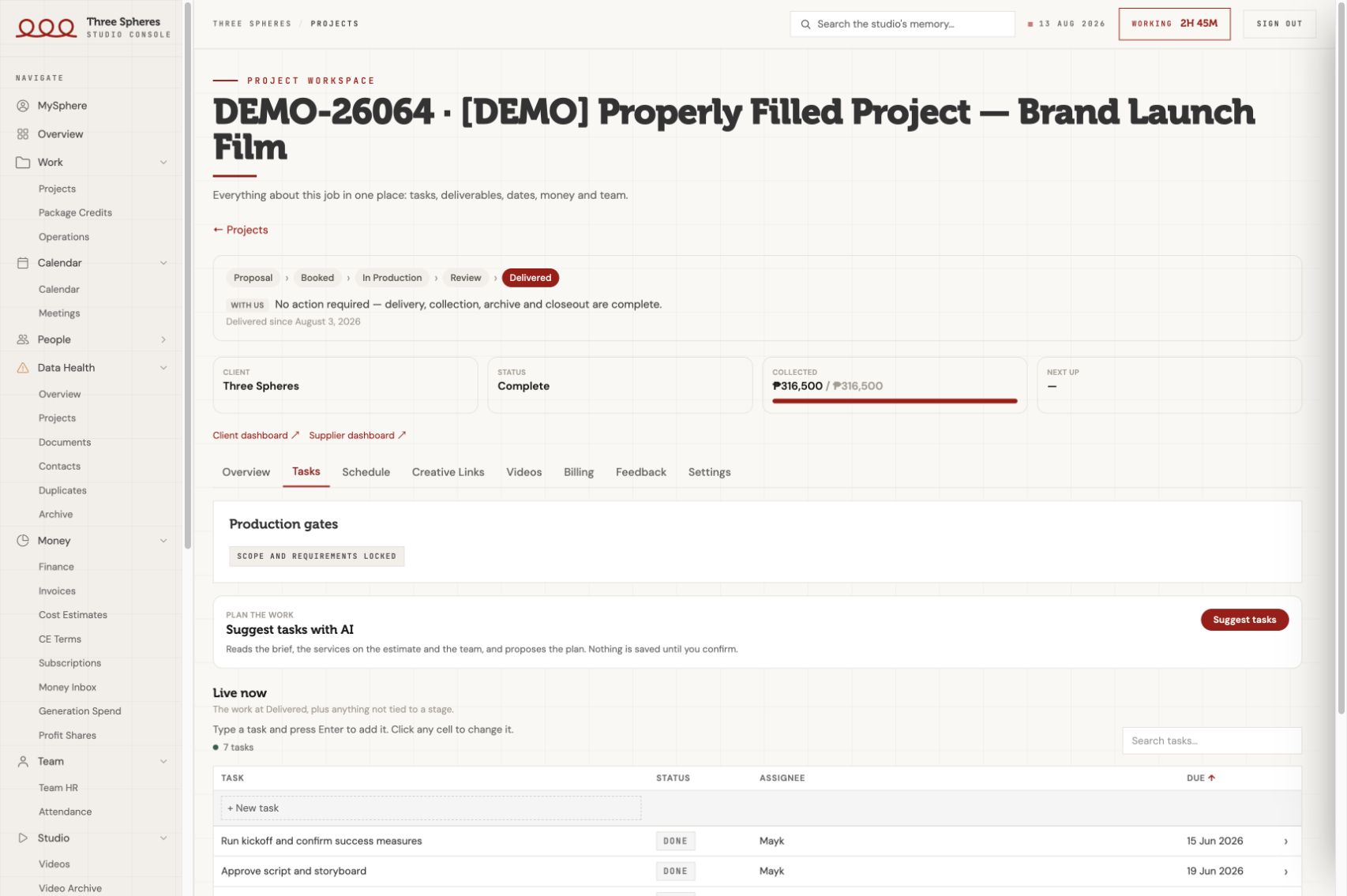
The full task-management page shows the project context, production gates, task rows, owner, due date, status, and AI-assisted suggestions without removing the sidebar or data.
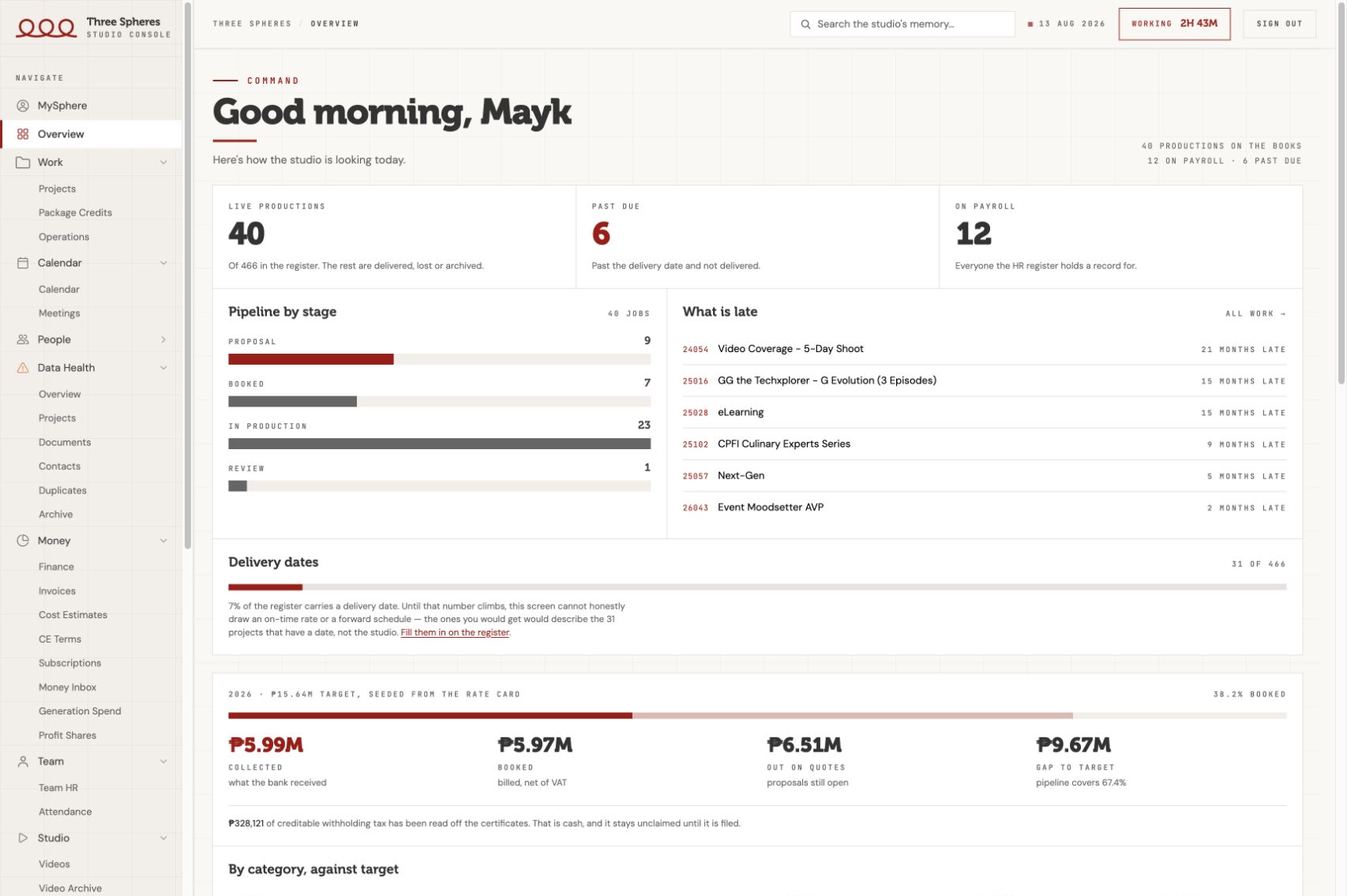
The complete studio dashboard shows live work, late work, capacity, pipeline, financial targets, and the full navigation. The page is shown exactly as captured, including the sidebar and data.
AI works behind the interface—reading routine inputs, connecting records, drafting the next step, watching for exceptions, and carrying approved patterns from one deployment to the next.

Fewer handoffs. Faster answers. Clear ownership. More attention for residents, customers, students, patients, judgment, and care.
The 327-hour estimate is an illustrative bottom-up planning model for an 800-unit property operation: 600 service requests, 1,500 visitor approvals, 2,400 parcel logs, 300 bookings, 200 updates, and four weekly reports per month. At ₱250 loaded labor per hour plus ₱15,000 in verified hard savings, the modeled annual economic value is ₱1.161M. It is not yet a measured customer result; each input must be validated in a paid audit and a 60–90 day baseline-versus-after pilot. The interfaces on slide two demonstrate the current product foundation.
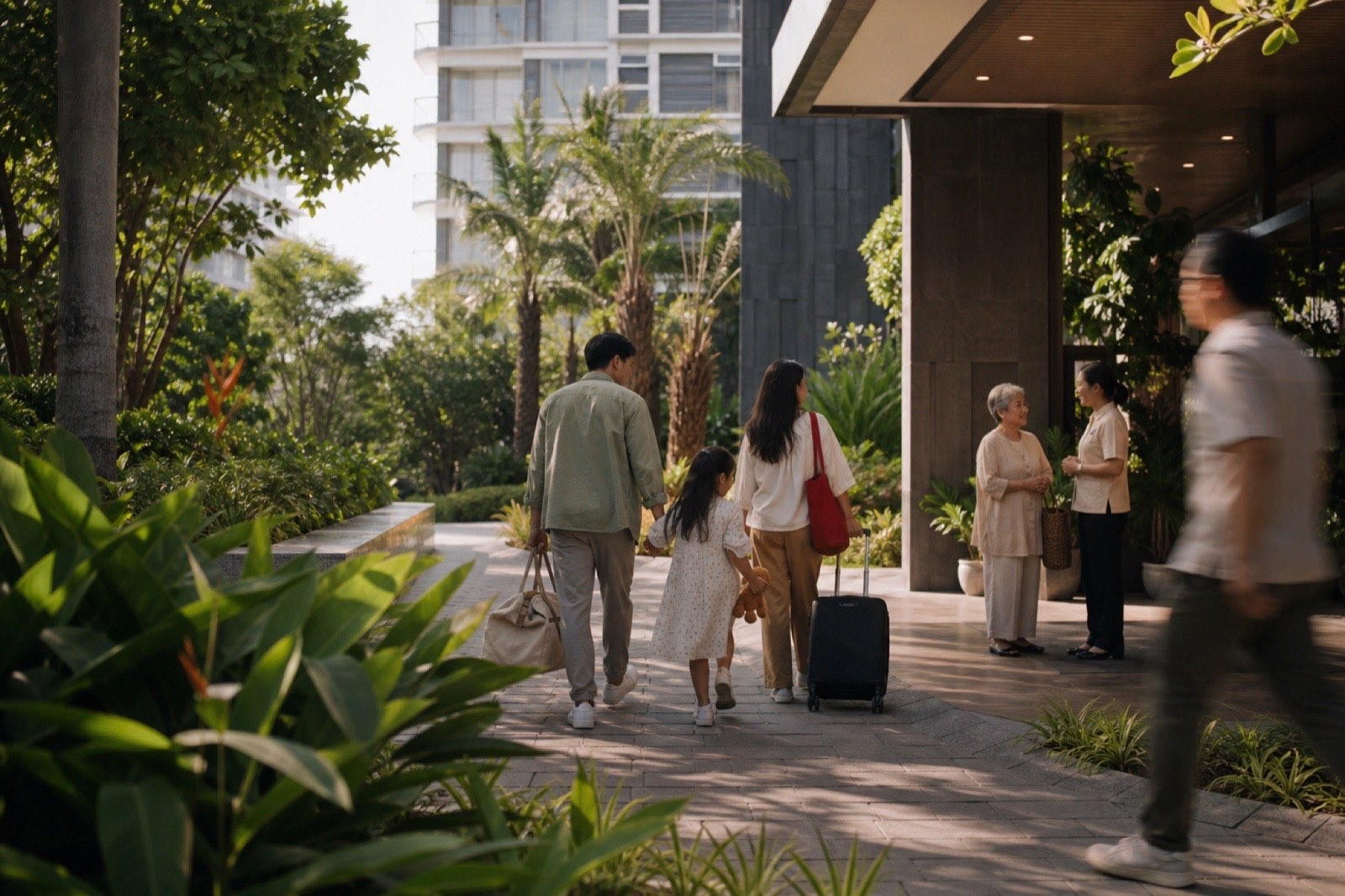
We are looking for launch partners who want to make daily coordination clearer, faster, and more human.

The story people feel. The system that makes work move.
Every request, visitor, document, task and approval lands in one shared record instead of five chat threads. AI does the reading, routing and chasing underneath; people keep the judgment. It runs today in condominium and office-building management and in a service business — one backbone, shaped per industry.
Every screen above is a live system, not a mockup. A modelled 327 coordination hours a month come back to an 800-unit property — an illustrative planning figure we validate in a paid audit and a 60–90 day pilot, never a claimed result. Launching with condominiums and office buildings; schools, hospitals, agencies and service businesses next.